
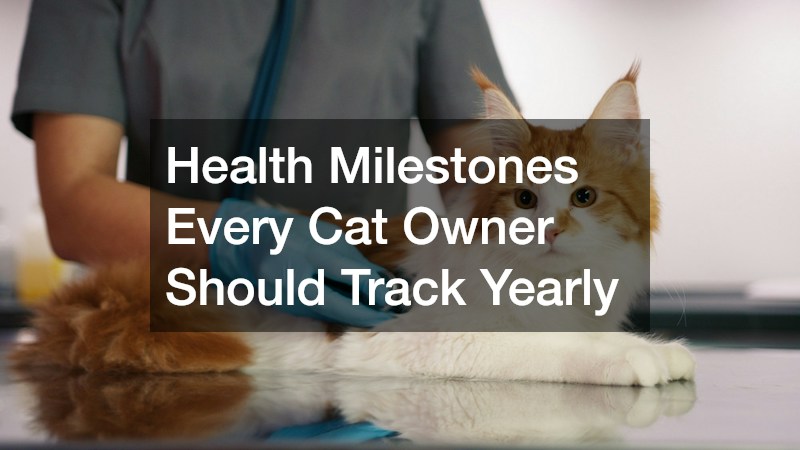
Cats are famously skilled at masking illness. By the time symptoms become obvious, a condition that was manageable weeks earlier may have progressed significantly. This biological tendency — inherited from ancestors who couldn’t afford to appear vulnerable — puts the burden of detection squarely on owners and veterinarians. Tracking specific health milestones on a yearly basis isn’t about being overly cautious; it’s about creating a consistent baseline so that changes are caught early, when intervention is most effective and least expensive. Knowing what to monitor, and when, transforms routine care into a genuine long-term health strategy.
The Annual Exam Is a Baseline, Not a Formality
Many cat owners treat the yearly vet visit as a vaccination top-up. In practice, a thorough annual physical exam serves a completely different function: it establishes a health baseline against which every future exam is compared. Blood pressure, body weight, coat condition, dental scoring, and organ palpation are all data points that only become meaningful when tracked across time.
Weight is a clear example of where this matters. A cat that weighs 10.5 lbs one year and 9.2 lbs the next hasn’t just “lost a little weight” — that’s a 12% body mass reduction, which in feline medicine warrants investigation into hyperthyroidism, diabetes, or early kidney disease. Without the prior year’s number on record, that decline is invisible.
The preventive versus reactive comparison is worth spelling out directly. Reactive care — treating a condition after it becomes symptomatic — is nearly always more expensive and carries worse outcomes than catching it during a routine exam. A hyperthyroid cat diagnosed early through a blood panel can be managed with daily oral medication costing roughly $20-$40 per month. Untreated, the condition accelerates heart and kidney damage, pushing treatment costs into the hundreds per month while significantly shortening lifespan.
Actionable steps for the annual exam:
- Request a complete blood count and chemistry panel at every annual visit for cats over age 7, even if the cat appears healthy.
- Keep a personal log of your cat’s weight at each visit — don’t rely solely on clinic records that may not be easily accessible between providers.
- Ask the vet to score dental health on a 0-4 scale and record it, so year-over-year progression is measurable rather than subjective.
Dental Health Tracking Owners Consistently Underestimate
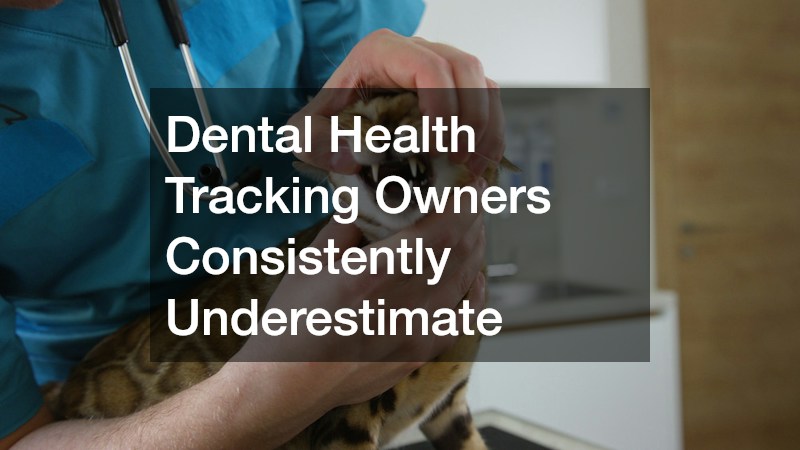
Periodontal disease affects an estimated 70-80% of cats by age three. That figure is striking not because dental disease is unavoidable, but because owners rarely learn how quickly it progresses or what the downstream consequences are. Bacteria from inflamed gum tissue enter the bloodstream and have documented associations with kidney and cardiac damage — making dental health far less cosmetic than it appears.
The practical problem is that cats rarely show obvious dental pain. They continue eating, sometimes right up until a tooth root abscess ruptures. By that stage, what might have been managed with a professional cleaning at around $250-$500 becomes an extraction procedure that can run $800-$1,500 or more depending on the number of affected teeth.
From a tracking standpoint, owners should be comparing two things year over year: the vet’s dental score and visible home observations. Redness along the gumline, brown tartar buildup on the upper rear molars, and breath that has worsened noticeably since the prior year are all signs that the interval between professional cleanings should be shortened. Some cats with genetic predispositions to dental disease need professional cleanings every 12 months; others can safely go 18-24 months. The baseline established at each exam is what drives that decision — not a fixed schedule applied to every cat identically.
- Introduce toothbrushing with enzymatic cat toothpaste at least three times per week; daily brushing reduces plaque buildup by roughly 50% compared to weekly sessions.
- If a cat resists brushing entirely, ask about dental gels or water additives as a secondary option — they’re less effective but significantly better than nothing.
- Flag any new head-tilting while eating or sudden food preference changes to your vet, as both are commonly linked to dental pain rather than pickiness.
Senior Cat Milestones Require a Different Monitoring Frequency
The threshold most veterinarians use is age 10-11 as the start of the senior life stage, though some place it earlier at 7-8 for certain breeds. The practical implication is that annual monitoring intervals appropriate for a young adult cat become inadequate for a senior one. Kidney function, thyroid levels, and blood pressure in older cats can shift meaningfully within six months — a gap that a once-yearly exam misses entirely.
Kidney disease is the most common cause of death in older cats, and its early stages are almost entirely symptom-free. The marker used most reliably is SDMA (symmetric dimethylarginine), a kidney function indicator now included in many senior blood panels that detects decline earlier than traditional creatinine measurements. Catching chronic kidney disease at Stage 1 or 2 rather than Stage 3 or 4 gives owners significantly more time and more treatment options, including dietary management that can slow progression for years.
The comparison that matters for senior owners is semi-annual versus annual vet visits. Annual is appropriate for healthy adults under 10. For cats 10 and older — or any cat with a confirmed diagnosis like early CKD or hyperthyroidism — twice-yearly exams are the clinical standard, not an upsell. The added cost of one extra visit per year, typically $150-$300, is modest against the cost of managing a condition that was allowed to advance undetected.
- Schedule a blood pressure measurement at every senior exam; hypertension in older cats often accompanies both kidney disease and hyperthyroidism but is frequently missed if not explicitly tested.
- Ask specifically whether the SDMA marker is included in your cat’s blood panel — not all standard panels automatically include it.
- Monitor litter box habits between exams and note any increase in urination volume, which in senior cats is often the first owner-observable sign of kidney disease.
Behavioral Changes as Measurable Health Indicators
Physical exams capture what a vet can observe in a clinic setting — which is, by definition, a controlled, brief, and often stressful environment. Behavioral shifts at home fill in a layer of information that no exam room can replicate, and tracking them with the same discipline as weight or lab values significantly improves early detection.
Cognitive decline in cats, sometimes called feline cognitive dysfunction syndrome, presents as disorientation, altered sleep cycles, increased vocalization at night, and reduced interaction. These signs are easy to dismiss as personality changes or aging quirks. But when documented and compared against prior years, a pattern becomes visible. A cat that began vocalizing at 2 a.m. starting around age 14 and gradually increased in frequency is showing a trackable trend — not just an occasional annoyance.
Pain assessment is another area where behavioral tracking earns its place. Cats with arthritis — which affects an estimated 60% of cats over age 6 — rarely limp visibly. Instead they stop jumping to surfaces they previously used, groom less thoroughly (particularly the lower back and base of tail), and become more withdrawn. None of these signs appear on a blood panel.
Knowing where your cat’s litter box, food station, and favorite resting spots are relative to one another matters practically. A cat that previously navigated stairs without hesitation and now avoids them entirely is communicating something worth documenting. That documentation, shared with a vet, enables targeted orthopedic assessment rather than a general “she seems fine” conclusion.
When something acute develops — an injury, sudden collapse, or rapid respiratory change — the behavioral and physical baseline you’ve built over years helps emergency vets triage the situation more accurately, because the vet knows what “normal” looks like for that specific cat.
Building a Yearly Health Record That Actually Gets Used
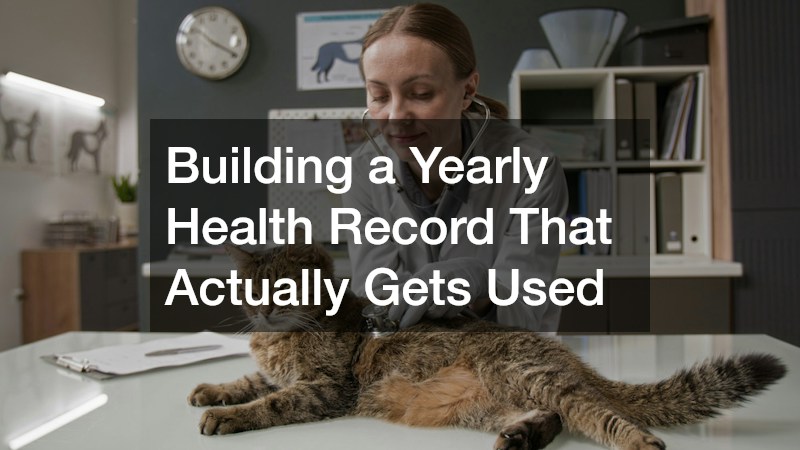
Tracking only works if the records are accessible and consistent. A mental note from last year’s exam does little good when a different vet sees the cat two years later or when an emergency arises at 11 p.m.
A simple approach that works well in practice: maintain a single document or note — digital or paper — that records date, weight, dental score, blood panel results, any behavioral changes noted in the prior year, and vaccine status. Update it at each annual exam and take a photo of any printed lab results to attach. This takes roughly 15 minutes per year and creates a longitudinal record that transforms each new vet visit from a starting-from-scratch assessment into a genuinely informed evaluation.
The preventive value of this kind of record compounds over time. A vet who can compare five years of blood values for an older cat can spot a creatinine trend that is still technically within the normal range but has been climbing steadily — a pattern that warrants earlier intervention than the number alone would suggest.
- Store vet records in a shared cloud folder so they’re accessible from any device if a non-emergency but urgent situation arises when the usual clinic is closed.
- Record behavioral observations quarterly rather than only at vet visits — even two or three sentences noting changes in sleep, appetite, or activity level creates a usable year-over-year comparison.
- At each annual exam, ask the vet to summarize the one or two values most worth watching before the next visit, and note them prominently in your record.
Turning Milestones Into a Year-Round Habit
Health tracking for cats isn’t a once-a-year task completed at the vet’s office and forgotten. The exam creates the record; the owner fills in what happens between appointments. Committing to a quarterly five-minute behavioral check — does the cat move the same way, eat with the same enthusiasm, seek contact at the same frequency — takes almost no time and consistently surfaces the subtle shifts that early intervention depends on. Start with one reliable log, revisit it before each annual exam, and bring specific observations rather than general impressions. That habit, sustained over years, is what turns routine ownership into genuinely informed advocacy for a cat’s long-term health.
