
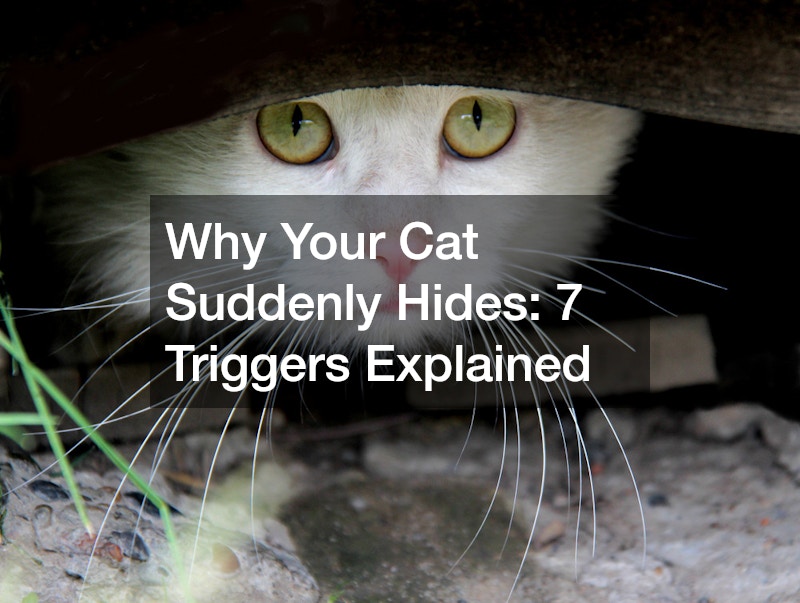
One moment your cat is lounging on the couch, and the next she has vanished under the bed for hours at a time. Sudden hiding is one of the most common behavior changes cat owners notice, and it almost always means something has shifted in your cat’s environment, health, or emotional state. Understanding the real reason behind the behavior can help you respond appropriately instead of assuming it will simply pass.
Below are seven common triggers that explain why cats suddenly retreat and go quiet.
Unexplained Pain or Illness Symptoms
Cats are hardwired to hide discomfort, a survival instinct left over from their wild ancestors who could not afford to look vulnerable. When a cat suddenly hides and also shows changes in appetite, litter box habits, or grooming, illness is often the underlying cause. Conditions like urinary blockages, dental pain, or arthritis can make a cat withdraw from normal activity and family interaction.
If hiding is paired with vomiting, lethargy, labored breathing, or refusal to eat for more than a day, this is not something to wait out. A veterinarian can run bloodwork, check vital signs, and identify problems that are invisible from the outside. In cases involving sudden collapse, difficulty breathing, or repeated straining in the litter box, an emergency vet visit may be necessary the same day rather than waiting for a routine appointment.
- Loss of appetite lasting more than 24 hours
- Hiding combined with labored or rapid breathing
- Straining to urinate with little or no output
- Sudden aggression when touched in a specific area
New Household Noises and Construction Work
Loud, unfamiliar sounds are one of the fastest ways to send a confident cat into hiding mode. Renovation work, appliance repairs, or even a new vacuum cleaner can trigger a stress response that lasts well beyond the noise itself. Cats associate sound with potential danger, so anything sudden or rhythmic, like drilling or hammering, tends to feel threatening.
Giving your cat a quiet room away from the noise, complete with familiar bedding and water, can ease the transition during home projects. Most cats return to normal once the disruption ends, though some take several days to fully relax again. If construction or repair work is ongoing, maintaining a consistent safe space helps prevent the hiding from becoming a long-term habit.
Arrival of a New Pet or Wild Animal Encounter

Territorial stress is a major driver of sudden hiding, especially when a new animal enters the picture. A newly adopted dog, an unfamiliar cat wandering into the yard, or even a raccoon getting into the garbage can make an indoor cat feel unsafe in its own home. Cats pick up on scent cues long before they see the intruder, which is why hiding sometimes starts before you even notice anything unusual outside.
If wildlife has been getting close to the house, such as opossums, raccoons, or stray animals near windows and doors, addressing the outside problem can help your cat feel secure again. In situations where wild animals are nesting nearby or repeatedly entering the property, professional animal removal services can safely relocate them and reduce the ongoing stress signals your cat is picking up on. Once the outside threat is resolved, most cats gradually resume their normal routines.
- Hissing or growling at windows and doors
- Increased time spent hiding during early morning or dusk
- Marking behavior near entry points
- Refusal to use a cat door or go near the yard
Changes in Household Routine or Family Members
Cats thrive on predictability, and even small schedule changes can throw them off balance. A new work schedule, a family member moving out, a baby arriving, or houseguests staying for an extended period can all disrupt a cat’s sense of stability. The hiding in these cases is usually a coping mechanism while the cat adjusts to the new normal.
Reintroducing structure quickly, such as feeding at the same times and maintaining a consistent bedtime routine, often shortens the adjustment period. Most cats settle within one to two weeks once the household rhythm stabilizes. If hiding continues well beyond that window, it may point to a deeper stress issue that deserves closer attention.
Recent Move or Furniture Rearrangement
Moving to a new home is one of the most disorienting experiences for a cat, since their sense of security is closely tied to familiar scent markers throughout a space. Even rearranging furniture in a current home can be enough to trigger hiding, because cats build mental maps of their territory using smell and visual landmarks. When those references suddenly change, cats often retreat until they feel confident enough to explore again.
Slowly introducing your cat to one room at a time, using familiar bedding and toys, can rebuild that sense of security faster. Pheromone diffusers and vertical hiding spots like cat trees also give cats a sense of control over their new surroundings. Patience matters here, since some cats take a few days to adjust while others need several weeks.
- Confine your cat to a single room at first
- Bring bedding, litter box, and toys from the old space
- Avoid forcing interaction before the cat approaches you
- Keep a consistent feeding schedule during the transition
Underlying Anxiety or Past Trauma Triggers
Some cats hide suddenly because a specific sound, smell, or situation reminds them of a past negative experience, even one that happened years earlier. Rescue cats and former strays are especially prone to this kind of trigger response, since their history often includes unpredictable or frightening events. A slammed door, a raised voice, or even a person who resembles a previous caregiver can set off hiding behavior that seems to come from nowhere.
If anxiety-driven hiding becomes frequent or severe, a professional in animal behavior can help identify specific triggers and may recommend a gradual desensitization plan tailored to the cat’s history. Consistency, gentle handling, and avoiding punishment for hiding all help build trust over time. Cats that feel safe are far more likely to recover their confidence than those that are pushed to interact before they are ready.
Conclusion
Sudden hiding is your cat’s way of communicating that something in its world feels unsafe, uncomfortable, or unfamiliar. Paying attention to timing, accompanying symptoms, and recent household changes will usually point you toward the real cause. When physical symptoms accompany the behavior, do not hesitate to reach out to a veterinarian, and treat any signs of severe distress as a reason to seek same-day care. With patience and the right response, most cats come back out of hiding once they feel secure again.
